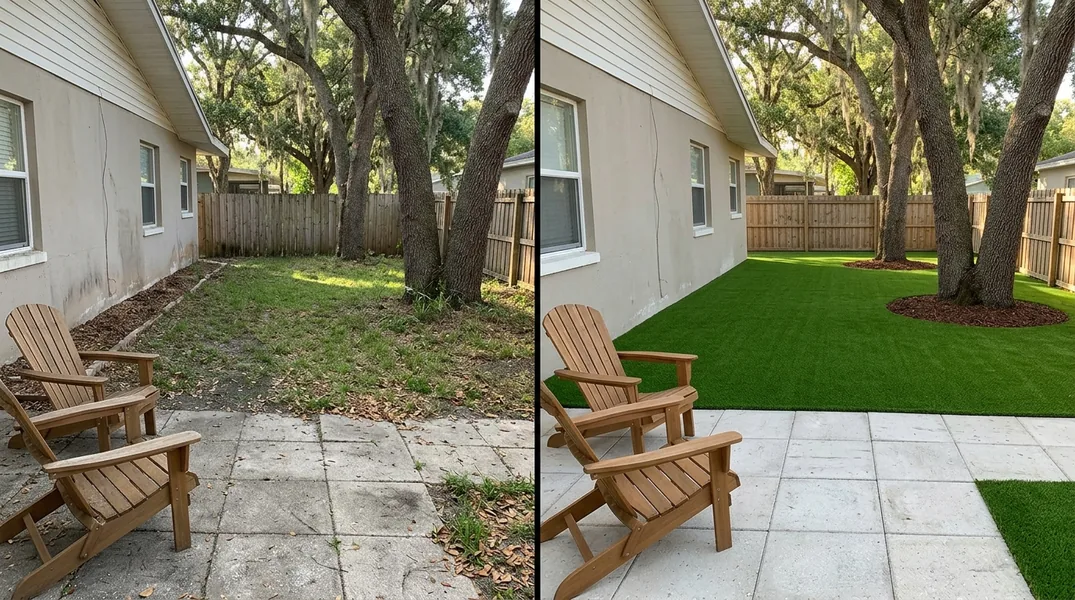
Why Drainage Matters for Artificial Grass in Lakeland's Sandy Soil
If you live in Lakeland, you know the challenge: sandy soil that drains too quickly in some spots and pools water in others, especially during Florida's notorious afternoon downpours. When it comes to Residential Artificial Grass Installation, proper drainage is not optional. It's the foundation of a lawn that stays green, odor-free, and structurally sound for years to come.
Many homeowners assume artificial grass doesn't need drainage because it's synthetic. That's a costly misconception. Without a properly designed drainage system, water accumulates beneath the turf, creating a swampy base that accelerates wear, promotes mold and mildew growth, and can eventually cause the grass to shift or settle unevenly. In Lakeland, where rainfall can be intense and unpredictable, a weak drainage foundation turns your new lawn into a liability rather than an asset.
Understanding What to Put Under Artificial Grass
The layer beneath your artificial grass is arguably more important than the grass itself. Think of it as the skeleton that supports everything above. What to put under artificial grass depends on your existing soil conditions, the intended use of the lawn, and local drainage patterns. For most Residential Artificial Grass Installation projects in Lakeland, we start with a compacted base of crushed limestone or recycled asphalt, typically 2 to 4 inches deep, depending on soil stability and water table concerns.
The base layer serves multiple purposes: it provides structural support to prevent settling, it improves drainage by creating a stable platform above sandy soil, and it helps level the surface for a professional finish. Above this base, an artificial grass underlay or drainage fabric is installed to further manage water flow while keeping the turf stable. The underlay acts as a buffer between the base and the grass, allowing water to drain while preventing sand or soil from migrating upward into the turf fibers. This two-layer approach is especially critical in Lakeland, where the native sandy soil can shift and compact unevenly over time.
Artificial Grass Underlay: Choosing the Right Material
An artificial grass underlay is not all the same. The market offers several options, each with different drainage rates, durability, and cost profiles. Closed-cell foam underlays are budget-friendly and provide some cushioning, making them popular for residential lawns where comfort underfoot is valued. Open-cell foam and recycled rubber underlays drain faster and are more durable, making them better choices for high-traffic areas or properties prone to heavy water accumulation. For Pet Turf & Dog Run Installation, we often recommend more robust underlay options that can withstand repeated use and provide superior drainage for urine and rainwater.
The thickness of your underlay also matters. A thicker underlay (typically 1 to 2 inches) offers more cushioning and better water distribution, but it also costs more and can sometimes trap water if the base beneath it isn't properly sloped. In Lakeland's climate, we typically recommend a mid-range underlay with a drainage rate of 60 to 80 gallons per hour per square yard. This rate ensures water moves through quickly enough to prevent pooling but slowly enough to avoid washing away the base layer during heavy rains. The right underlay balances drainage performance with longevity and cost, and our team can assess your specific property to recommend the best option.
Turf Base Prep: The Critical Foundation Step
Proper turf base prep is where most installation success or failure is determined. Before any grass or underlay goes down, the existing ground must be evaluated, cleared, and prepared. This starts with removing debris, rocks, and any vegetation that could create uneven spots or puncture the underlay. The soil is then graded to ensure proper slope for water runoff. In Lakeland, where the landscape is relatively flat, creating even a subtle 1 to 2 percent slope can make a significant difference in how water drains away from your lawn and foundation.
Next comes compaction of the base layer. Using a plate compactor or roller, the crushed limestone or recycled asphalt is pressed down firmly to create a stable, level platform. This step cannot be rushed. Inadequate compaction leads to settling over time, which creates low spots where water collects and causes the turf to bunch or wrinkle. In areas with poor native drainage or high water tables, we may recommend adding perforated drainage pipe beneath the base layer to channel water away from the lawn entirely. This added step costs more upfront but prevents expensive repairs down the road and ensures your lawn performs well even during Lakeland's heaviest rainfall events.
Handling Lakeland's Afternoon Downpours: Design Considerations
Lakeland experiences an average of 54 inches of rainfall annually, with much of it concentrated in summer months as intense afternoon thunderstorms. These aren't gentle sprinkles. A single storm can drop an inch or more of water in under an hour, overwhelming poorly designed drainage systems. When we design artificial grass installations for Lakeland properties, we account for these extreme weather patterns by ensuring the drainage system can handle peak rainfall rates, not just average conditions.
This means calculating the total square footage of your lawn, understanding how much water it will receive during a heavy storm, and ensuring your base and underlay can process that volume without saturation. For larger lawns or properties with complex grading, we may recommend additional features like French drains, swales, or connections to existing storm drains. For Pool Surround Turf installations, drainage design is even more critical because standing water near a pool creates safety hazards and accelerates turf deterioration. The goal is a system that handles Lakeland's worst-case weather while maintaining a beautiful, usable lawn year-round.
Getting Your Artificial Grass Installation Right: Contact Lakeland Turf Installation
Installing artificial grass on Lakeland's sandy soil is not a DIY project if you want results that last. The difference between a lawn that thrives for 10 to 15 years and one that fails within a few years often comes down to base prep and drainage design. At Lakeland Turf Installation, we have installed hundreds of residential lawns throughout the area, and we understand exactly how to work with local soil conditions and weather patterns to create installations that perform.
If you're ready to transform your yard with artificial grass that drains properly and stays beautiful through every storm, reach out for a free estimate. Call us at (863) 250-7652 to discuss your project, ask questions about underlay options, or schedule a site visit. Our team will evaluate your property's drainage needs and recommend the best base prep and materials for your specific situation. Let's build a lawn that's built to last.
Looking for a professional artificial grass installation company in Lakeland? Lakeland Turf Installation responds fast for all your artificial grass installation needs.
Get a Free Quote